
Spanish electricity bills explained in plain English
Spanish electricity bills are not designed to be easy to understand.
Most people only look at the final amount and miss the details that actually affect what they pay.
This page explains the key parts of a Spanish electricity bill so you can understand where your money goes and why bills vary so much.
Anatomy of a Spanish Bill
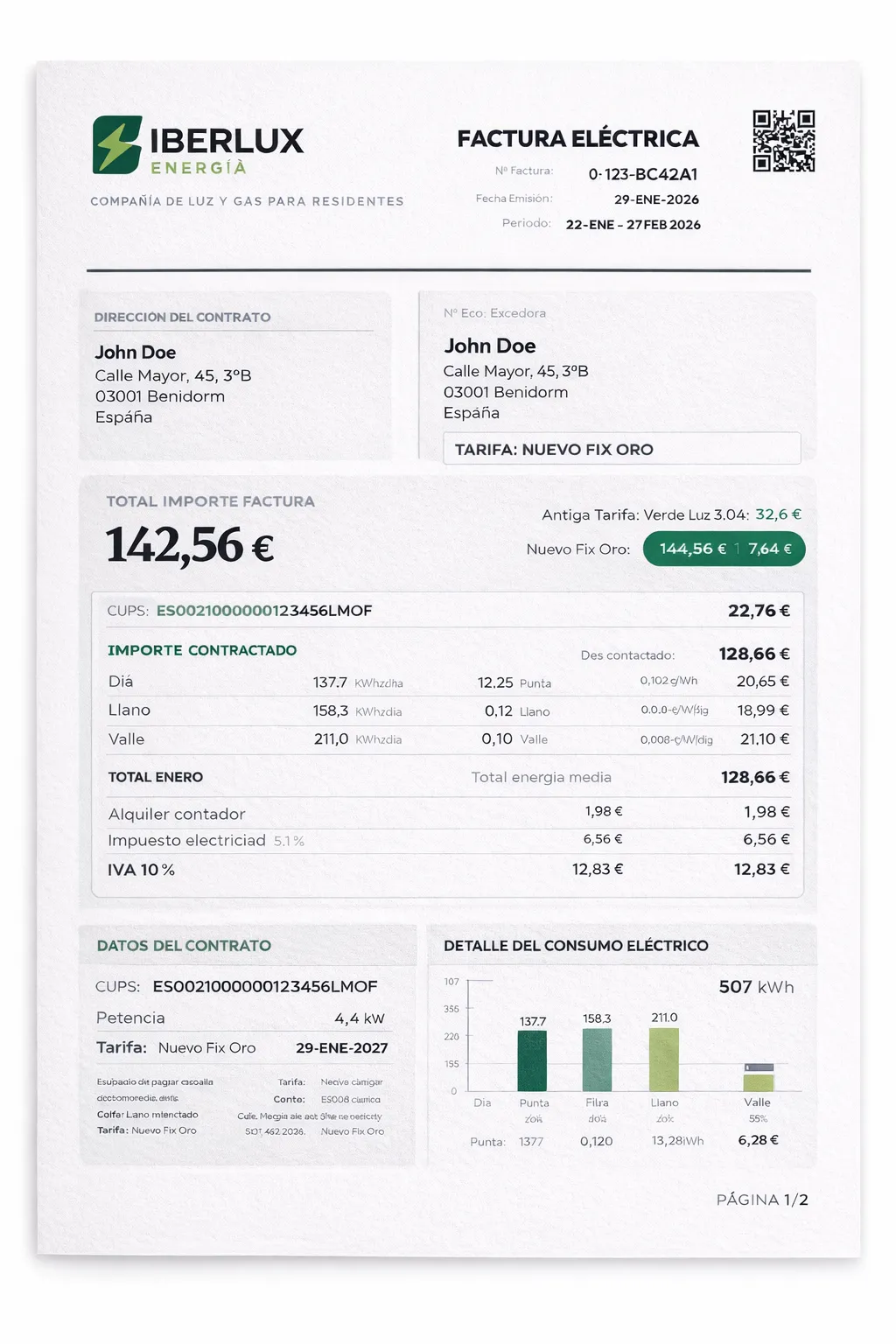
Interact with the bill below to understand the key sections and potential savings opportunities.
Select a section
Hover over the numbered dots on the bill to see a detailed explanation of that section.
Fast Select
The main parts of a Spanish electricity bill
Most Spanish electricity bills include the following sections:
- Supply address and CUPS number
- Billing period and number of days
- Energy consumed, measured in kilowatt hours (kWh)
- Contracted power charges, known as potencia
- Regulated costs and taxes
Each section plays a role in the final total.
Energy usage versus contracted power
Your bill is mainly made up of two different costs.
Energy usage
This is the electricity you actually use. It is measured in kWh and varies each month.
Contracted power (potencia)
This is a fixed daily charge based on how much power your home is allowed to draw at once.
Many homes in Spain pay more potencia than they need, which increases the bill every month regardless of usage. If you have solar panels, finding the right tariff is especially important — our Octopus Sun Club explainer covers how solar owners can reduce both potencia and consumption charges.
If you are considering increasing your potencia, you will need a current CIE (Certificado de Instalación Eléctrica) — the electrical certificate that sets your installation's maximum power limit.
Why electricity bills change even when usage does not
It is common for bills to rise even when consumption stays similar.
This can happen because:
- Billing periods vary in length
- Regulated charges change
- Taxes are applied differently
- Contract terms expire without notice
Without analysing the full bill, it is hard to spot the real cause.
Why comparing prices alone is misleading
Two households paying the same price per kWh can end up with very different bills.
Usage patterns, potencia levels, and contract terms matter just as much as the unit price.
That is why analysing your actual bill gives a clearer answer than online price tables.
Upload your bill for a clear explanation
If you want to know whether your bill makes sense, upload it on our homepage and we will analyse it for you, free of charge.
Upload your electricity billRelated Guides
See all guidesHow to read your electricity usage graph
Understanding your electricity usage graph is key to saving money. Learn how to spot patterns and seasonal changes that affect your bill.
Am I Paying Too Much for Electricity in Spain? | UswitchSpain
Many households in Spain overpay for electricity without realising. Check for common signs and learn why your bill might be higher than necessary.
What is a CUPS number?
Every electricity supply point in Spain has a CUPS number. Learn what it is, where to find it on your bill, and why it is essential for switching suppliers.
Electrical Certificate (CIE) in Spain: What It Is and How to Get It
The Electrical Installation Certificate (CIE or boletín eléctrico) is required when you need to connect power, upgrade potencia, or install solar. Learn what it is, when you need one, and how to get it.
Frequently Asked Questions
Why is my electricity bill so hard to understand?
Spanish electricity bills often use complex technical terms and split costs into many different sections like access tolls, taxes, and capacity charges (potencia), making it hard to see a clear breakdown.
What is potencia and can I reduce it?
Potencia is the contracted power level (in kW) that you pay for daily, regardless of usage. Lowering it can save money, but if you go too low, your 'plomos' (breaker) might trip when using multiple appliances.
Why does my bill vary from month to month?
Bills vary due to differences in billing period length, changing government tax rates, seasonal usage changes, and price adjustments in the regulated market.
Is the price per kWh the most important factor?
Not always. A low kWh price might come with high fixed costs or specific conditions. Your consumption profile and contracted power are just as critical to the final total.